
Home · Services · Security Systems
Security systems for buildings that can't have an off day.
Intrusion detection, monitoring integration and access-ready cabling, built into the same rack as everything else in the building. Not a keypad screwed to the wall — a system, specified for what the building actually needs to protect.
SECURITY SYSTEMS / WHAT IT IS
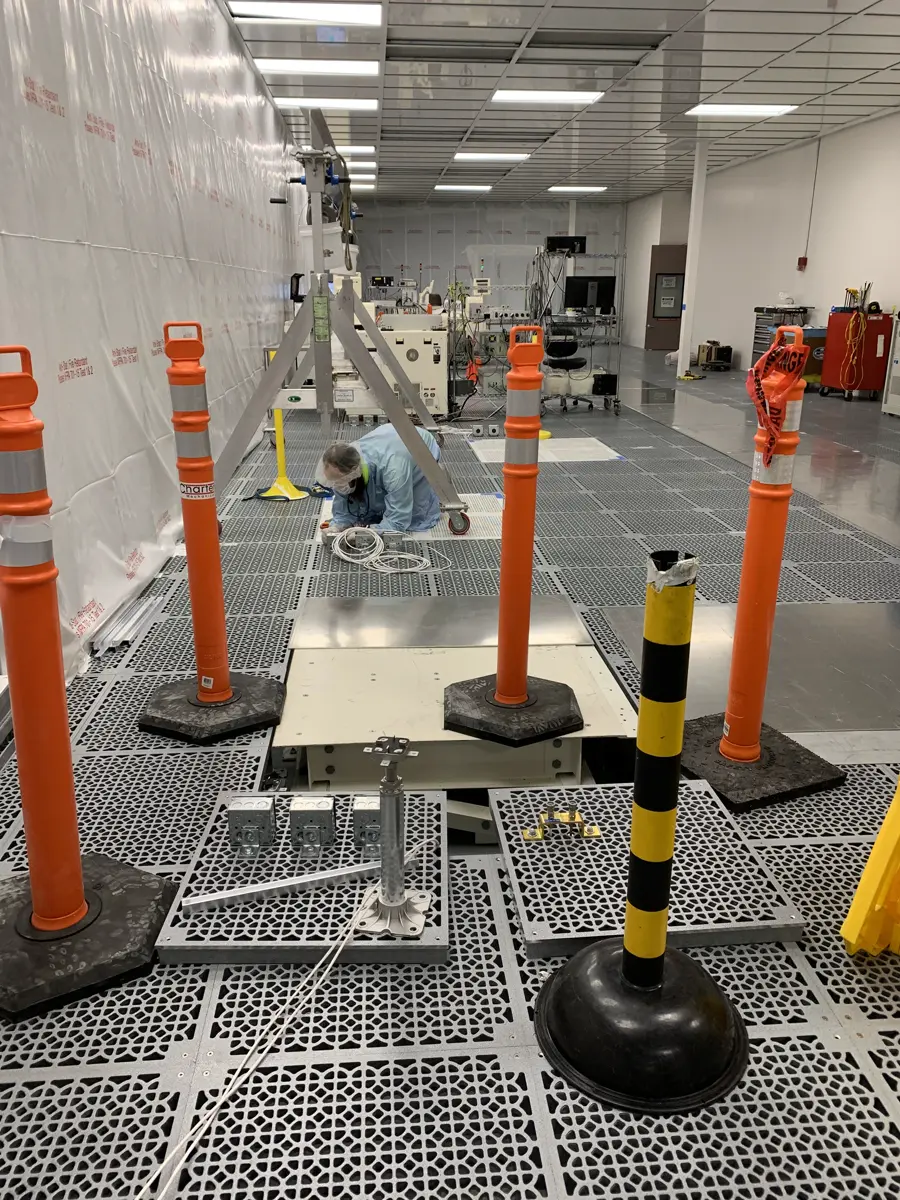
Door contacts, motion sensors and glass-break, wired into one panel.
A commercial security system is a set of sensors — door and window contacts, motion detectors, glass-break sensors — wired back to a panel that knows the difference between a delivery at 2pm and a break-in at 2am. In a compliance-sensitive space, that same wiring plan has to satisfy an inspector, not just work.
SECURITY SYSTEMS / WHERE IT SHOWS UP
Satellite centers, operating rooms, cannabis compliance.
Buildings where a security gap is not a paperwork problem — it is the paperwork problem. Satellite and critical-infrastructure sites where restricted areas have to actually stay restricted. Operating rooms where access has to be logged, not just locked. Cannabis cultivation and retail facilities where security is part of keeping the state license, not a nice-to-have. The system gets specified to the standard the building has to meet, not the other way around.
On the door
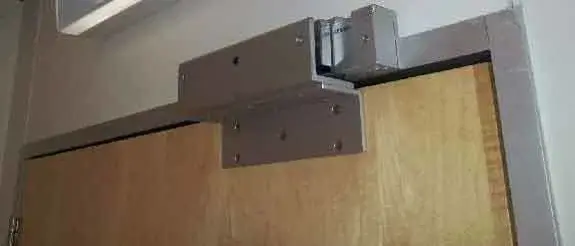
The hardware most people never notice, until it doesn't work.
SECURITY SYSTEMS / WHY IT'S A SYSTEM, NOT A GADGET
A keypad by the back door is not a security system.
A real system means every sensor reports to one panel, that panel is wired on cable that is labeled and testable, and the whole thing was specified for the building — not picked off a shelf. It shares the rack with your cameras and access control if you have them, so one crew is responsible for how they work together, not three vendors pointing at each other.
SECURITY SYSTEMS / READ THE LABEL
What the panel rides on.
Sensors, keypads and panels are low-power devices that typically run on standard structured cabling, often carried over PoE with the rest of the rack. Published standards, so the conversation starts with the same numbers.
See the full cabling page →TIA/EIA-568 · IEEE 802.3 · channel lengths, copper at 10G
SECURITY SYSTEMS / WHAT'S INCLUDED
Three things every job includes.
Intrusion detection
Door and window contacts, motion and glass-break sensors, wired into one panel that knows your building's actual layout.
Monitoring, your way
The panel talks to a monitoring service or your own front desk. We wire it for whichever you choose, and can change it later.
Built to code
Permits and inspections handled as part of the job in Oregon and Washington, not an afterthought you find out about later.
SECURITY SYSTEMS / THE PROCESS
From walkthrough to armed.
One cable. Five stations. The same process whether it's one door or a whole campus.
- 01
Walkthrough
We look at every door, window and restricted zone the building actually has.
- 02
Design & quote
Sensor counts, panel placement, monitoring plan and a written price.
- 03
Install
Licensed crew, cable dressed and labeled, sensors mounted and tested as they go.
- 04
Commission & test
Every zone tripped and confirmed before the panel is armed for real.
- 05
Hand over
Codes issued, monitoring confirmed, and a labeled record of every device.
SECURITY SYSTEMS / DUE DILIGENCE
Before you hire anybody.
Four questions worth asking any security-system bidder, not just us.
- Look up the CCB number.Oregon publishes licence status, bond and insurance for every contractor. Ours is #249201.
- Ask if it's monitored or just logged.A panel that only records an event is a different (and cheaper) product than one that alerts a monitoring service in real time. Know which one you're buying.
- Ask how access is revoked.When someone leaves, how fast can a code or credential actually be pulled from the system? Get the answer before you need it.
- Ask who is actually pulling the cable.A licensed crew, not a subcontractor of a subcontractor, behind every panel.
SECURITY SYSTEMS / WHO CALLS US
We know we are not the only crew on site.
General contractors
Permit coordination and inspection scheduling handled alongside the rest of the low-voltage scope, on your timeline.
IT providers
You manage the network the panel reports over. We get the cable and the hardware to spec, terminated and labeled.
Property & facility managers
One standard for intrusion detection across every building you manage, instead of whatever the last tenant left behind.
ACCESS CONTROL
A reader is not the lock.
A card reader, a door controller, and the locking hardware are three separate decisions, and getting one wrong undoes the other two. Electric strikes and magnetic locks fail differently: fail-secure hardware stays locked on power loss, fail-safe hardware releases. Which one goes on which door depends on egress requirements and what's behind it, not on price or preference. A request-to-exit device tells the system someone is leaving on purpose, so the door doesn't read as forced. A door position switch reports open-or-closed state to the access system — it's often the same reed-switch hardware as the intrusion contact mounted on that same frame, and the difference that matters is which panel it reports to, not the device itself.
- Fail-safe vs. fail-secureFail-safe hardware unlocks on power loss; fail-secure stays locked — set door by door, not building-wide.
- Request-to-exitTells the system someone is leaving on purpose, so the door doesn't read as forced.
- DPS vs. intrusion contactOften the identical reed-switch hardware — the difference is which panel reads it, not the device itself.
- Credential riskProximity, smart card, and mobile credentials can be cloned; a PIN is guessed or shared instead, a different risk entirely.
- Lock power supplyElectrified hardware needs its own power supply sized for the lock, not shared off a convenience circuit.
VIDEO SURVEILLANCE
Identification is not detection.
A camera that can tell you something moved in a parking lot is a different design problem from a camera that can identify who walked through a door, and most complaints about video quality trace back to confusing the two. Identification needs pixel density on a face or plate at a known distance; wide-angle lenses that cover more ground lose that density fast. Every entry should have one camera set specifically to catch a face before a hood or mask gets adjusted — a choke point, not a wide establishing shot. Backlit lobbies and glass doors need wide dynamic range handling, or the person walking in is a silhouette. Infrared illumination has a working distance; past it, the image is grain, not detail.
- Identification vs. detectionPixels-per-foot needed to identify a face is different math from pixels-per-foot needed to detect motion.
- Choke-point cameraOne camera per entry, aimed to capture a face before it can be covered or turned away.
- Wide dynamic rangeHandles backlit glass doors and lobbies; more light alone doesn't fix silhouetting.
- Infrared working distanceIlluminators have a rated working distance — beyond it the image is noise, not detail.
- Wide-angle tradeoffCovers more area per camera but sacrifices the resolution needed for identification.
CREDENTIAL LIFECYCLE
Every card is a liability the day someone leaves.
An access system is only as good as the discipline behind it after handover. Access levels tie a credential to specific doors and specific hours, not a blanket key to the building — a cleaning contractor's card should not open the server room at 2 a.m. just because nobody set a schedule. Every credential event, granted or denied, writes to a timestamped log, and that log is the first thing anyone asks for after an incident. Contractor and vendor credentials should be issued with an expiration date built in, not left active until someone remembers to pull them. A lost card gets deactivated in software right away on networked panels; standalone offline locks only pick up that revocation at their next sync, not in real time — either way, the physical card itself is worthless once it's pulled from the list. None of this works unless someone on staff owns the credential list after handover, or the log fills with noise nobody reviews.
- Access levelsRestrict a credential to specific doors and specific hours, not blanket entry.
- Audit logEvery access event — granted, denied, forced door — writes to a timestamped, exportable log.
- Contractor credentialsShould auto-expire on a set date, not rely on someone remembering manual cleanup.
- Lost-card responseDeactivated in software right away on networked panels; offline locks pick it up at next sync.
- OwnershipSomeone has to own the credential list after handover or the audit log becomes unreviewed noise.
ALARM REPORTING
A signal has to say which door, not just that something happened.
An intrusion panel that reports "alarm" without saying which zone tripped just sends someone walking the building to find out what happened. Zone descriptors tie each sensor to a name — "back dock door," not "zone 14" — because whoever answers the call at 2 a.m. has never seen the panel. A duress code lets a coerced user disarm the system on the surface while silently telling the monitoring center to send police instead of a keyholder; it has to be a separate code from the everyday one, and it only works if staff actually know it exists. Opening and closing reports log which user code armed or disarmed the system and when, so an alarm that happens to coincide with a normal disarm doesn't get waved off as user error. Getting the signal out still matters underneath all of it: a phone-line-only panel goes silent if the line is cut, while a supervised cellular or IP communicator treats a missed check-in as an alarm condition on its own.
- Zone descriptorsNamed to the sensor, like "back dock door," not a number, since the person taking the call has never seen the panel.
- Duress codeA separate code from the everyday one that silently reports a police response instead of a routine disarm.
- Opening and closing reportsLog which user code armed or disarmed the system and when, so a coincidental disarm isn't mistaken for the cause.
- Supervised communicatorsCellular and IP paths check in on a schedule; a missed check-in is treated as an alarm on its own.
- Phone-line-only signalingGoes silent if the line is cut, with no missed-check-in warning to flag it.
SENSOR SELECTION
Every opening has one right sensor.
Sensor choice follows construction, not habit. An acoustic glass-break sensor listens for the specific frequency profile of glass shattering; a shock sensor instead feels the impact directly through the frame — and laminated or wired glass doesn't break the way tempered glass does, so the wrong sensor for the glazing type either misses the break or nuisance-trips on every slammed door. Motion coverage has the same problem: dual-technology sensors that require both a passive-infrared and a microwave trigger before alarming cut false alarms from HVAC drafts, sunlight sweeps, and hanging signage, at the cost of a slightly more deliberate response. Curtain-pattern coverage protects a single plane, like a doorway; volumetric coverage floods a room. Using a curtain sensor where the room needs volumetric coverage leaves the corners unprotected, and nobody notices until something walks through one.
- Glass-break vs. shockAcoustic sensors read a frequency signature; shock sensors feel impact through the frame directly.
- Glazing typeLaminated and wired glass don't fracture like tempered glass — the glazing type dictates the sensor.
- Dual-technology motionPIR plus microwave requires both triggers, cutting false alarms from drafts and sunlight.
- Pet immunitySettings are weight-rated, not a simple toggle.
- Curtain vs. volumetricCurtain coverage protects one plane like a doorway; volumetric floods a room — mismatching the two leaves gaps.
VIDEO INFRASTRUCTURE
Storage math nobody budgets for.
Storage need is retention days multiplied by resolution, frame rate, and camera count, and it compounds fast — a facility that decides after the fact it needs ninety days instead of thirty usually finds out the recorder can't hold it. Codec choice changes that math meaningfully; newer compression can cut the footprint roughly in half at the same visual quality compared to older formats. Just as important is where the cameras sit on the network: they belong on their own segment, isolated from office computers and point-of-sale systems, because a camera with a default password and outdated firmware is one of the more common ways an intruder gets a foothold — not through the front door, through the camera watching it. Sizing the recorder and drives before install, not after the first full drive, avoids the gap in coverage nobody wants explained later.
- Storage sizingRetention days multiplied by resolution, frame rate, and camera count, sized before install, not after the first full drive.
- Codec choiceNewer compression formats can cut storage footprint roughly in half at equivalent image quality.
- Network segmentationCameras belong on an isolated network segment, separate from office computers and point-of-sale systems.
- Default credentialsDefault passwords and unpatched firmware are a common way a camera system gets compromised.
- Drive redundancyNo redundancy on the recording drives means a drive failure erases the one week of footage that was actually needed.
RESTRICTED-ACCESS AREAS
Some doors need more than one credential.
Regulated environments change what a security system has to do beyond simple deterrence. Facilities handling cannabis product or controlled substances typically operate under rules that specify camera placement, image resolution, and how many days footage has to stay on file — that's a compliance requirement set by the regulator, not a design preference, and the system has to be built to produce a clean report on demand, not just live video on a monitor. Most limited-access-area rules call for logged single-credential entry with camera coverage; some regulated environments layer on two-person access for the highest-security storage areas, and which one actually applies is worth confirming against the specific rule rather than assumed by default. Visitor and delivery logs need to run separate from staff access logs, because an auditor will ask for both and expects them to reconcile.
- Regulatory camera rulesRegulated facilities typically specify camera placement, resolution, and minimum footage retention as a compliance requirement.
- Two-person accessSome regulated environments require it on the highest-security storage; most limited-access-area rules require only logged single-credential entry.
- Separate logsVisitor and delivery logs need to be tracked separately from staff access logs for an audit.
- Mandatory coverage areasPoint-of-sale and vault-access areas are usually subject to specific required camera coverage.
- Exportable reportingA compliant system produces an exportable report on demand, not just a live video feed.
SECURITY SYSTEMS / BEFORE YOU CALL
Straight answers.
Is a security system the same as cameras?
No. Cameras record and let you watch; a security system detects an intrusion at a door, window or restricted zone and raises an alarm. The two are usually installed together and share the same cabling and rack, but they are different systems. See our cameras/CCTV page for the recording side.
Do you monitor the system yourselves?
We install and wire the panel to talk to a monitoring service or to your own front desk, whichever you choose. Tell us your preference on the walkthrough.
Can you integrate access control into the same system?
Yes. Access control is its own service on this site, and it usually shares a panel, a rack and a cable run with the intrusion side. See our access control page, or ask for both on the same walkthrough.
Do you do residential alarm systems?
Our specialty is commercial and industrial installations. Tell us about the project and we will say honestly whether we are the right fit.
Are you licensed for this work?
We hold Oregon CCB #249201, Oregon electrical licence 4911LEA, CLE723 and Washington licence KNEPPJK854KK, with $2,000,000 in liability insurance and a $50,000 bond.
How do I get a quote?
Book a walkthrough. We look at the building, then you get a written scope and price you can compare against anyone else's.
SECURITY SYSTEMS / NEXT STEP
One panel. Every door.
Tell us the building and what has to stay restricted. We'll come look at it.
Move the pointer across this band